Industry
Food
Company
Kitopi
Crafting a better recipe management workflow
How we reduced recipe upload time from 15 to 6 days
Context
Kitopi manages thousands of recipes across multiple brands, with dozens of chefs creating and modifying several recipes each week.
However, the current process is slow and fragmented, often taking up to 15 days to complete a single recipe update. Communication gaps between teams contribute to these delays.
My focus was to streamline recipe creation and modification, reduce errors during uploads and updates, and consolidate all necessary tools into one cohesive system.
My involvement was to design a streamlined system that improved communication and minimized bottlenecks
Initial state
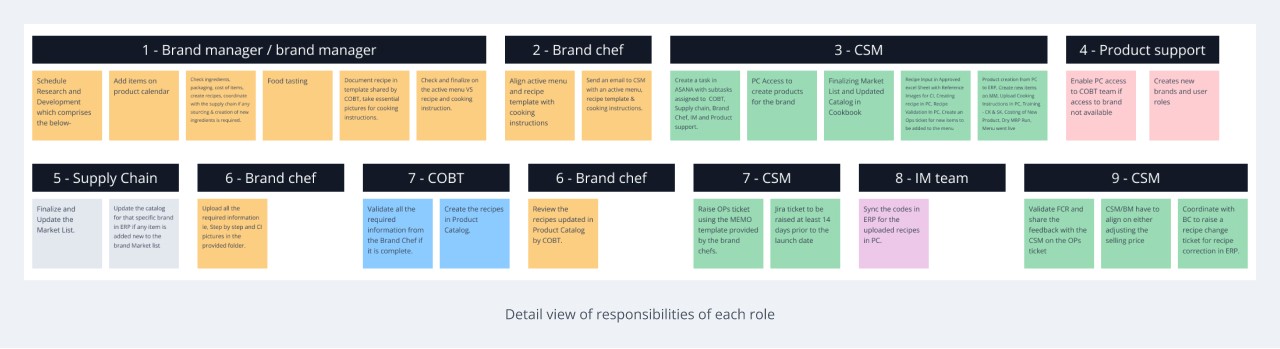
Surprisingly, adding or editing a recipe in the system required the involvement of 11 different teams, with much of the work handled offline. As a result, tracking the status of a recipe was almost impossible without sending emails or Slack messages. This lack of transparency and accountability made it difficult to ensure all recipes were complete and accurate before launch.
It was clear we needed a better way to collaborate and track progress.
Business Goals
North start: Reduce time it takes to create recipes by 50%
KR1: Increase recipes uploaded online to 95%
KR2: Reduce teams involved from 11 to 6
Business goal: Have a full online recipe management system
Problems
Only 20% of the recipe creation process happens online, leaving the remaining steps with little to no visibility. This makes it difficult to track progress and capture essential data.
Teams often find themselves waiting for others to complete their part of the process before they can move forward, causing bottlenecks that delay product launches.
With 11 different teams involved and no standardized workflows, issues and delays are inevitable.
Additionally, each chef follows their own approach for uploading recipes, which leads to misalignment and errors that frustrate the culinary team.
Challenges
Complex systems and workflows
Our internal system is highly complex, involving multiple tools (spreadsheets, data tables, internatl systems) and managing various roles . This complexity often leads to delays and bugs that slow down progress.
Expectations
The business plans to launch and integrate several brands over the coming years, and the speed at which we can create recipes directly impacts key OKRs for other teams. Delays in recipe creation slow down product launches, reduce operational efficiency, and can affect customer satisfaction
Time constrains
Due to business pressures, the team had very limited time to plan, develop a strategy, begin execution, and present results. This fast-paced environment left little room for thorough research or iteration, pushing us to prioritize rapid execution over detailed planning. Despite these constraints, we focused on delivering meaningful impact as quickly as possible.
Multiple stakeholders
Although securing initial buy-in was relatively easy, the process involved 11 teams facing unique challenges, which made alignment complex and time-consuming.
My role
As the Senior Product Designer, I led the overall strategy, provided guidance, and championed a user-centric approach throughout the process.
Collaborating closely with the Project Manager, Engineering Manager, Data Analyst, and key stakeholders, we developed a clear strategy, mapped a detailed roadmap, and conducted in-depth research to identify and resolve critical pain points. These efforts were essential in elevating the business to the next level.
Understand
Since I had recently joined the team, I needed to conduct user research to understand the different teams involved and the specific challenges they faced. This helped me identify and prioritize the most critical issues to address. To achieve this, we:
Analyzed the current process flow and identified all involved parties.
Audited the existing user experience.
Pinpointed key issues affecting both the business and users
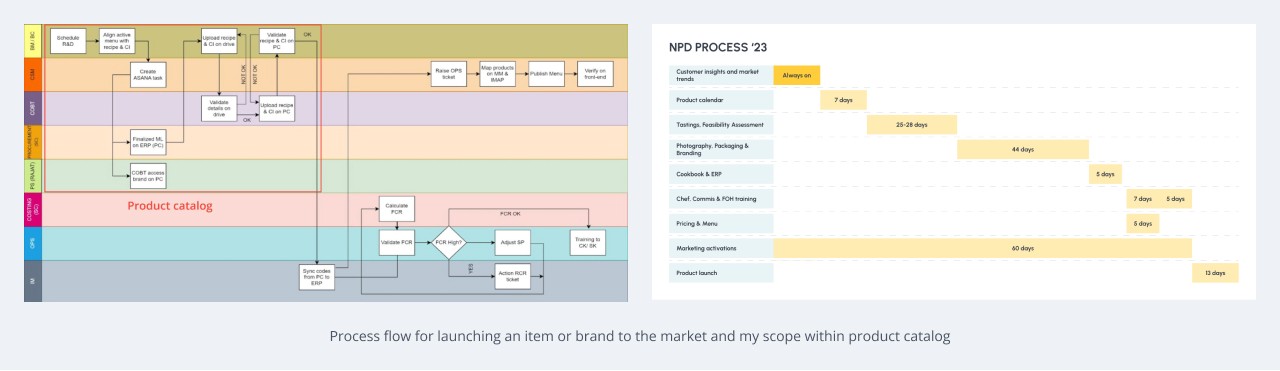
Analysis on Process Flows
Since I had recently joined the team, I needed to quickly grasp the process flow to visualize the key steps required to launch a product or brand.
This analysis highlighted significant gaps in the workflow that needed to be addressed, shaping the foundation for the redesign strategy.
Insights Summary
There is no visibility on costs. Surprisingly, the team doesn’t know the cost of what they’re creating until the new menu or brand is ready to go live and the costing team provides the numbers. This often leads to issues when the costs exceed expectations, forcing the entire process to restart.
Most of the work happens offline, with limited visibility. Our current approach isn’t scalable—different teams complete their tasks independently and rely on emails for communication. As a result, it takes about 2–3 months for a new menu or brand to reach the market.
Crafting a better way
We started developing a new journey map to better visualize the process and highlight the pain points uncovered in our research. One major issue emerged in the product building section, which was still handled offline. To resolve this, we focused on integrating this part of the process into the system, aiming to improve the user experience and shorten recipe creation time.
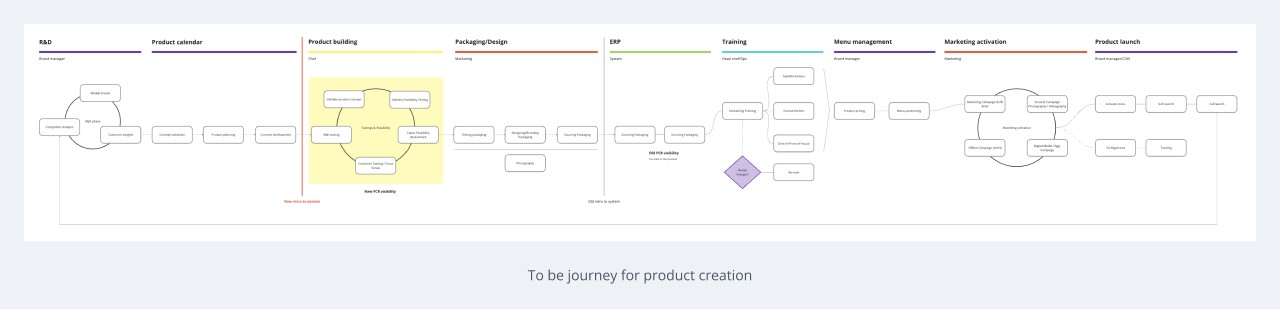
Given the system’s complexity, we recognized that certain processes would still need to occur offline. Our goal was to tackle a core issue that could resolve two problems at once, benefiting all teams and increasing overall capacity.
Plan and strategy
As part of my individual objectives, I collaborated closely with the Project Manager and Engineering Manager to develop a clear plan and strategy. Together, we evaluated and prioritized each opportunity, considering its potential impact and the design and engineering effort required. This ensured that our efforts were both strategic and efficient.
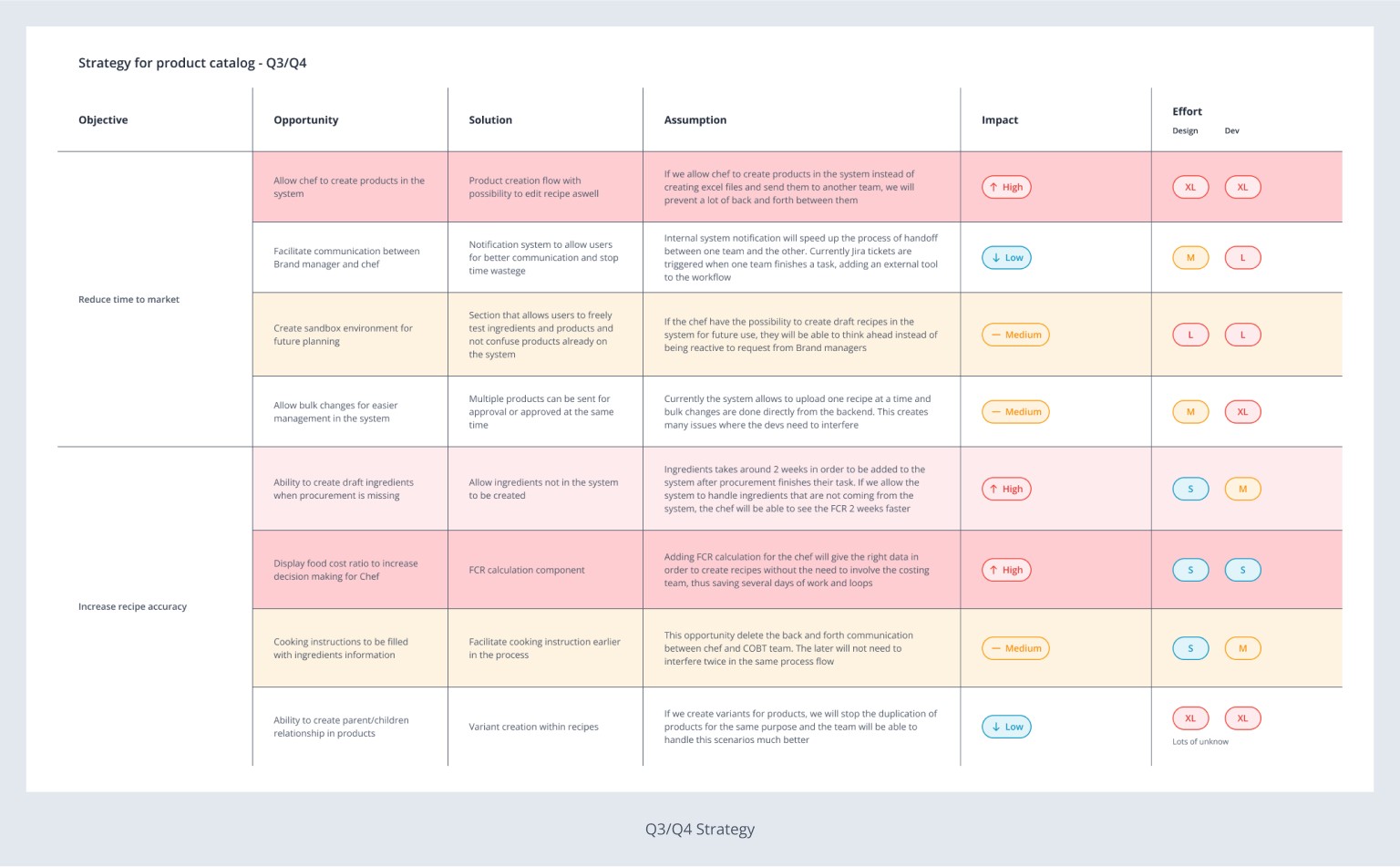
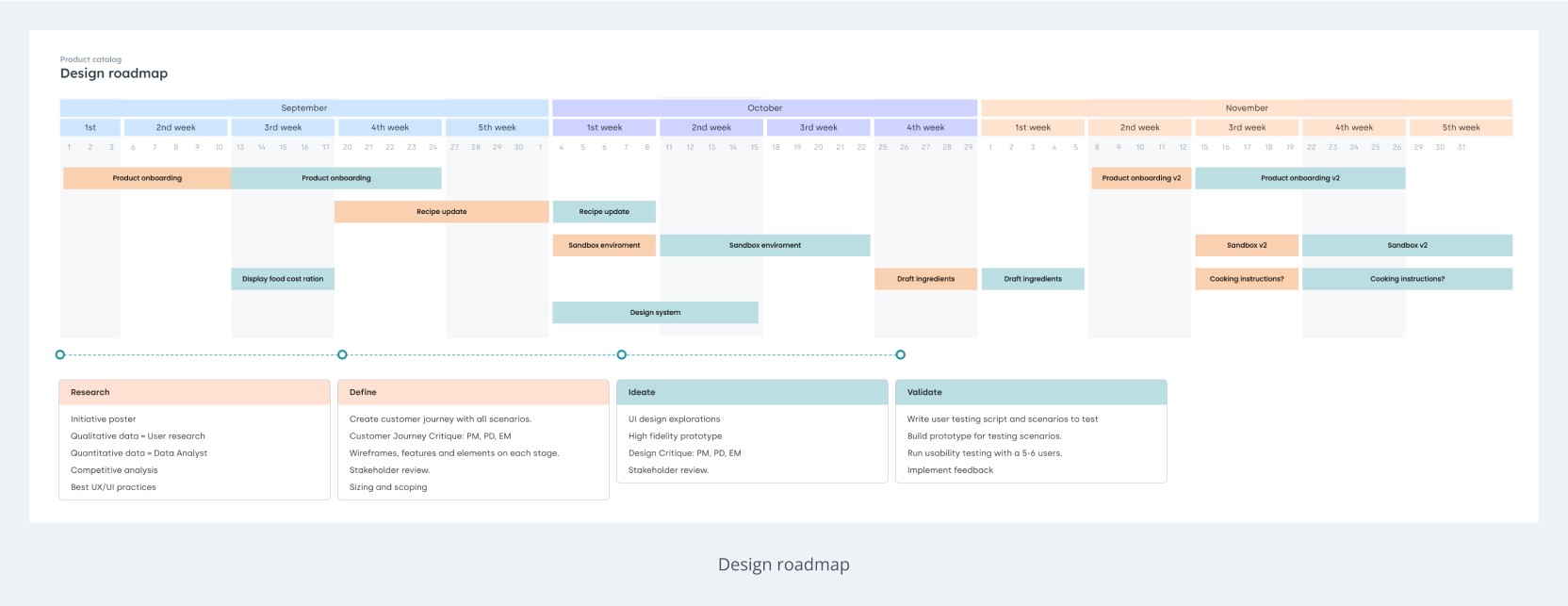
In addition to the strategy, I created a design plan to keep the team informed about when to expect outcomes for each initiative. Although it’s not a final version, it provides transparency and sets clear expectations for everyone.
Crafting Product Catalog
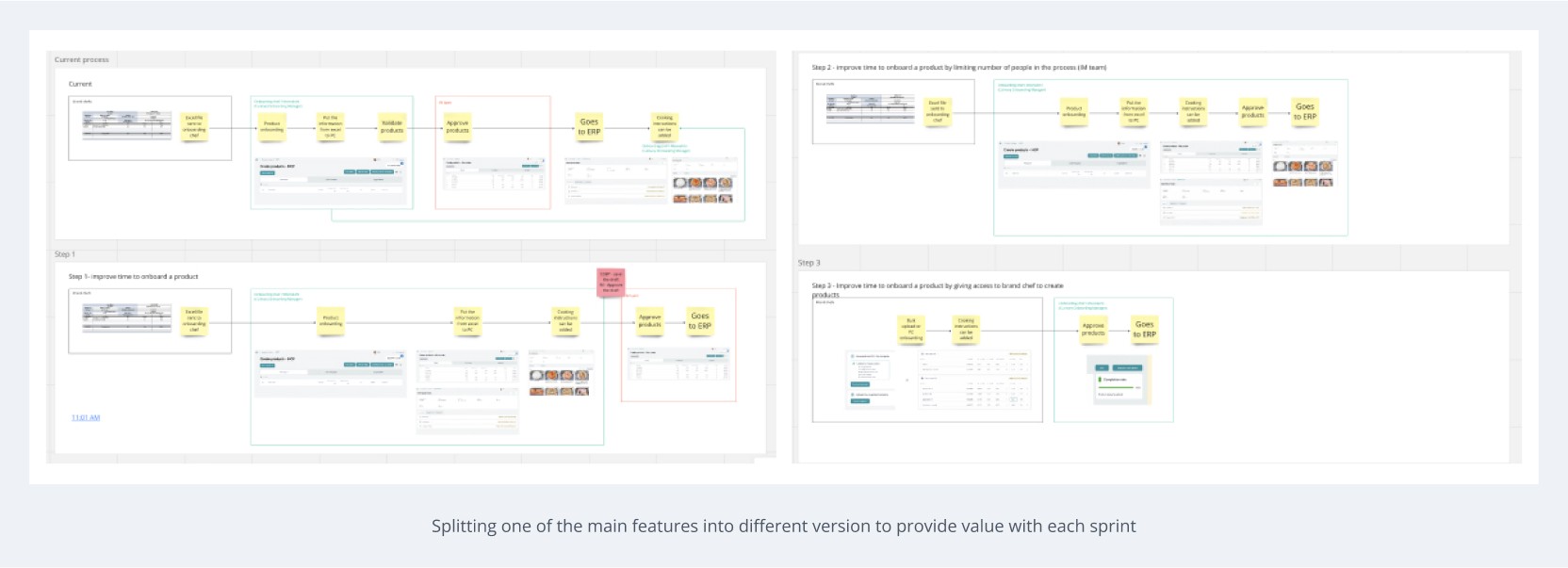
With the research and strategy complete, it was time to begin working on each initiative separately. Since the system couldn’t be transformed in a single sprint, we decided to create a visual reference showing what would be tackled immediately and what would be deferred for later. Below is an example of our decision-making process for the most impactful initiative identified earlier: “Product onboarding.”
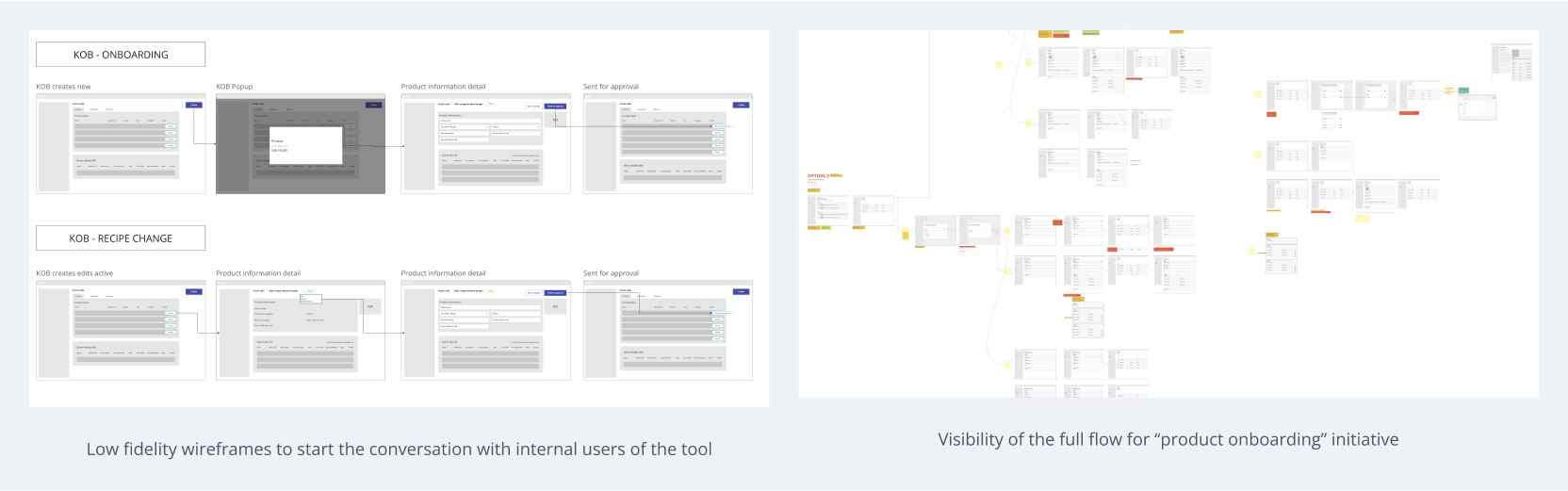
After organizing the flow and analysing what needs to be done with the whole team, it was time to start with wireframes to later test it with internal users of the system. We needed to be sure that all the changes were going to improve the current process and not making it worse.
Hi-Fi Design and Testing
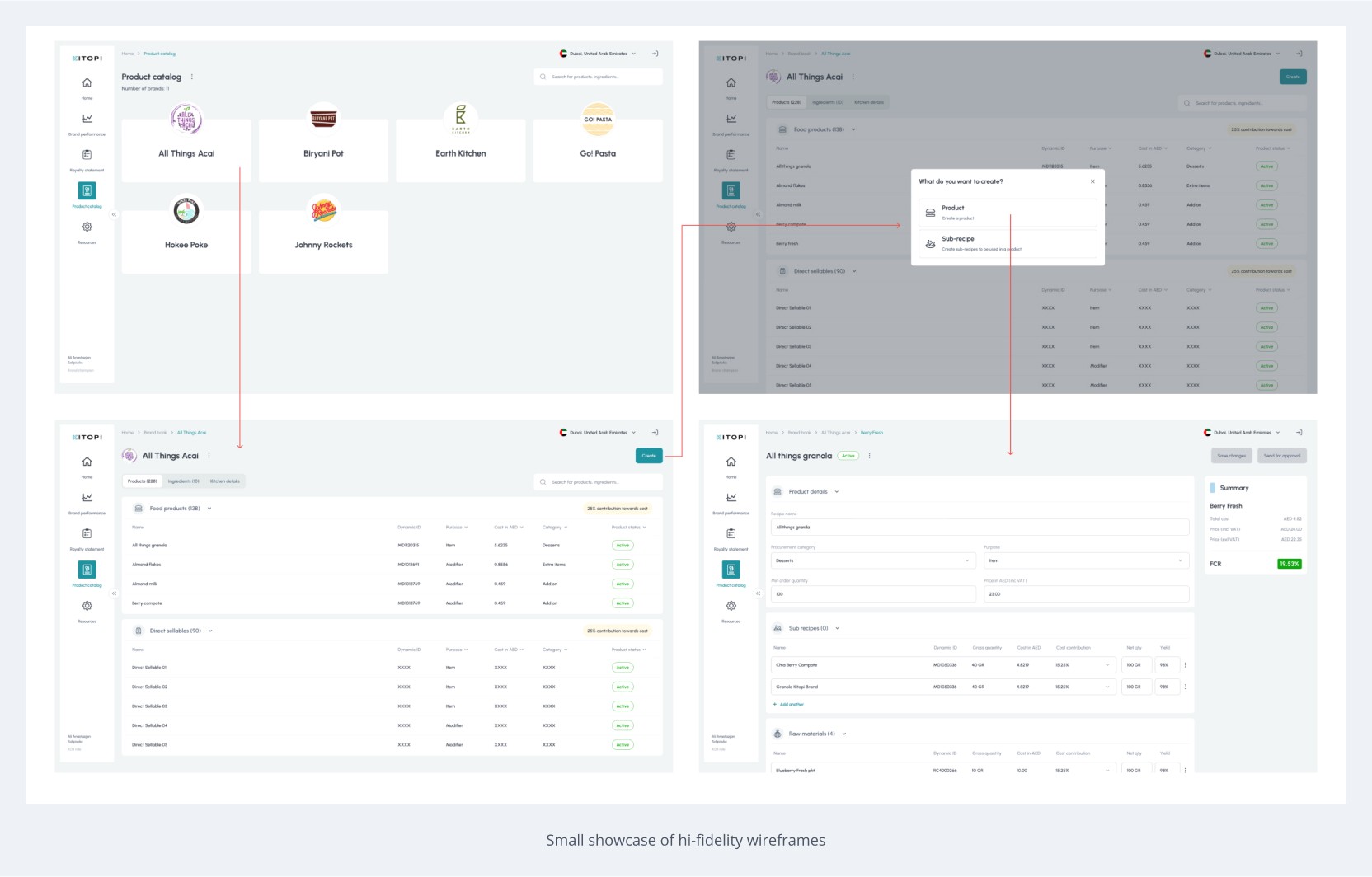
After several quick rounds of discussion with low-fi wireframes, we were ready to transition to hi-fi designs and rigorously test all interactions, gathering further feedback from internal users.
This phase was the most time-consuming from a UI perspective, as it involved multiple scenarios and complex flows. I also expanded the design system by adding several new components to accommodate the unique elements introduced in this project, laying the groundwork for future initiatives.
Learnings
Product designers wield considerable influence over an organization's strategy
Our role extends beyond creating visually appealing products; we have the ability to shape the direction and decisions of the entire organization. Through our creative, user-centric approach and problem-solving skills, we influence the strategic decisions that drive the company’s growth and success. This not only elevates the quality of our products but also helps propel the business forward.
Don’t rush to a solution
There’s often a sense of urgency within the business and the team to deliver quickly and make fast decisions in the product development process. It’s the product designer’s crucial responsibility to step back, assess the core issues, and conduct thorough research, ensuring thoughtful decisions that balance speed and quality, all while staying within deadlines.
Effective Communication is Key
With 11 teams affected by these changes, clear and consistent communication with everyone was crucial to the project’s success. Since some teams had other objectives to achieve, it was essential to ensure alignment on goals, timelines, and expectations. To facilitate this, I organized regular check-ins and status updates to keep everyone on the same page and avoid delays.
Celebrate Successes and Learn from Failures
Acknowledge and celebrate the successes of the project. Its important to analyse what went well and replicate those practices in future projects. Its also important to learn from failures or challenges and derive lessons from them